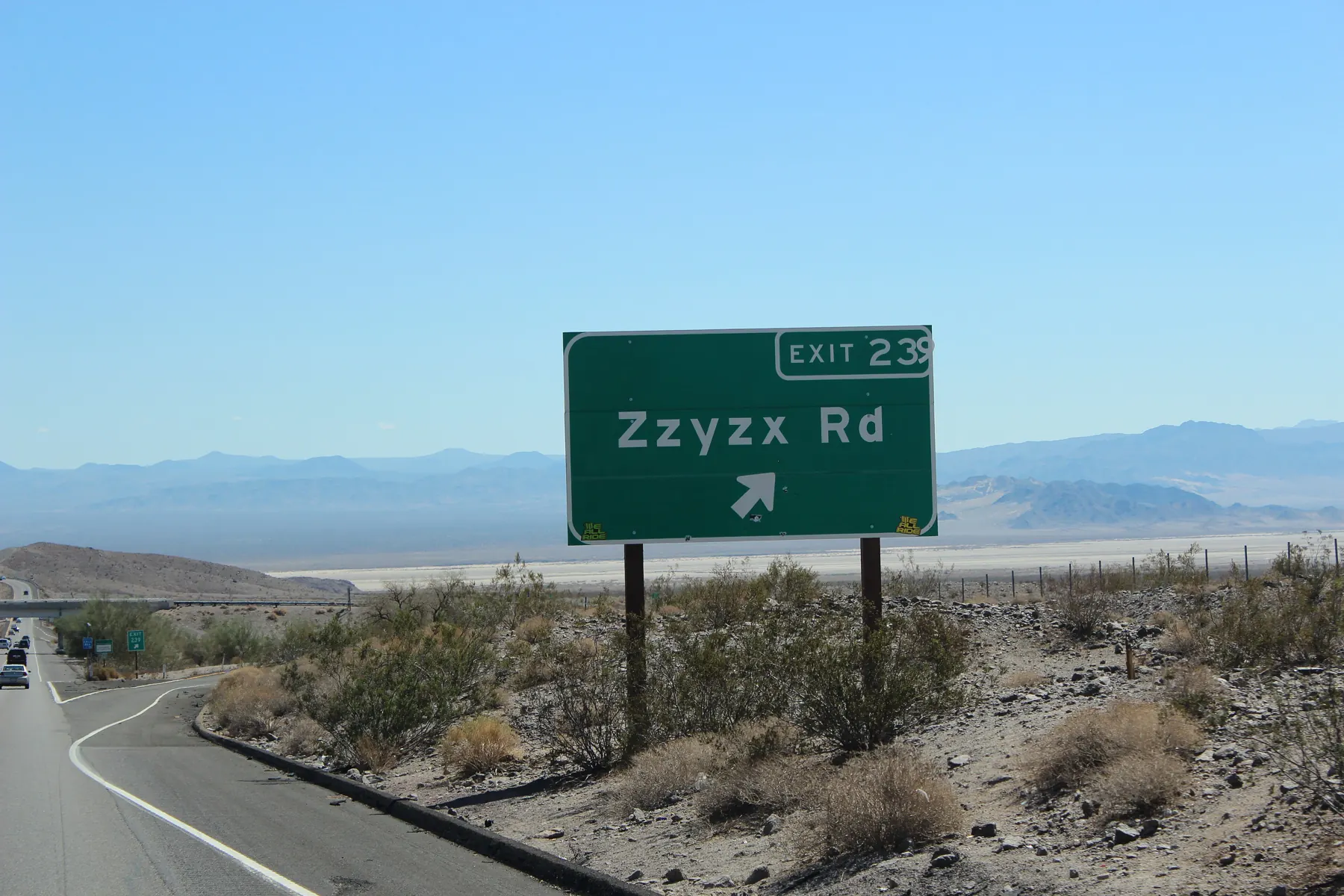
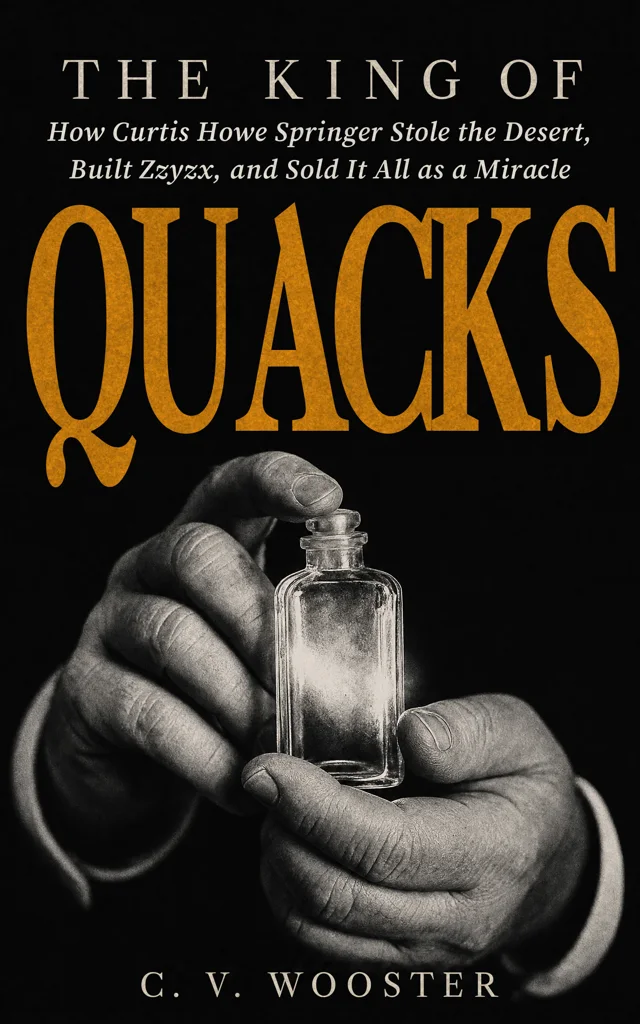
It's easy to laugh at the people who mailed money to Curtis Howe Springer. The National Park Service says he shipped more than four million packages from Zzyzx over thirty years: herb teas, "Nerve Cell Food," "Hollywood Pep Cocktail" and crystals that a former employee described as about 10 percent crust from Soda Lake and 90 percent Epsom salts. Who falls for that?
The honest answer is: almost everyone, under the right conditions. Springer's customers weren't stupid. They were people, and the human mind has predictable weak spots. He seems to have understood several of them by instinct. Here are the main ones, and how they still work.
1. Many illnesses get better on their own
Most of what people take remedies for, such as colds, aches, indigestion, fatigue and bad nerves, comes and goes. People tend to seek help when they feel worst, and from the worst point most conditions improve whatever you do. Statisticians call this regression toward the mean: an extreme measurement is usually followed by one closer to average.
For a seller this is pure gold. A customer takes Antediluvian Tea at their lowest point, improves over the next week, as they likely would have anyway, and credits the tea. Every remedy sold to people at their lowest benefits from this effect, which is why medicine relies on controlled trials rather than individual experience.
2. Expectation changes how we feel
The National Center for Complementary and Integrative Health defines the placebo effect as a beneficial health outcome arising from a person's expectation that a treatment will help. It notes that even the way a provider interacts with a patient can produce a positive response independent of any specific treatment.
Springer delivered expectation in bulk. He had a warm radio voice, a confident title of "Doctor," sermons, hymns and a desert oasis with palm trees and mineral baths. Placebo responses mostly affect how people feel, such as pain, energy and mood, rather than the underlying disease. But for many customers, feeling better was the goal. And this is where the danger lies: a remedy that makes you feel better can keep you away from treatment that actually works.
3. Testimonials beat statistics
One vivid story from a person like you is more persuasive than a table of numbers. Springer's broadcasts and pamphlets ran on this principle, and the Federal Trade Commission still lists it among the classic warning signs: "Dishonest companies use fake endorsements from patients or doctors claiming, 'you'll get miraculous results.'"
Testimonials also carry a hidden bias. You hear from the customers who felt better. People who felt nothing rarely write in, and the seller doesn't read their letters on air. Add confirmation bias, our tendency to notice evidence that supports what we already believe, and a handful of happy letters can feel like proof.
4. One product, many cures
The FTC's first red flag is a product that claims to cure many unrelated problems. Springer's catalog followed that pattern: one "cocktail" for pep, another tea for everything from constipation to tired blood. A cure for everything is really a cure for nothing, but broad promises widen the audience. Everyone has some symptom.
5. Trust borrowed from somewhere else
Springer borrowed authority from three directions:
- Medicine. He used "Doctor" and a list of degrees that, according to the AMA's Bureau of Investigation, he never earned from any reputable college. See the Fake File.
- Religion. He was a radio evangelist with hymns, prayers and a chapel at Zzyzx. Questioning the products could feel like questioning the faith.
- Nature. Desert springs, minerals and herbs sounded wholesome and ancient. The FTC still warns that "natural" does not mean safe or effective.
Each layer made skepticism feel rude.
6. Generosity creates obligation
Springer's genius may have been his pricing. His products were offered in exchange for "donations," the Ninth Circuit noted in 1974, prompted by radio appeals, and the resort famously welcomed guests on a sliding scale. Generosity invites reciprocity. A listener who has received free sermons, free songs and maybe a free bus ride to the desert feels a pull to give something back, and a donation to a "humanitarian" mission feels like charity, not a purchase. It also blunts the urge to ask whether the product works. You don't demand a refund from a church.
7. A villain to blame
Brinkley, Baker and Hoxsey all claimed the medical establishment was persecuting them, and the strategy worked so well that Hoxsey's libel win against JAMA earned him only $2. The judge reasoned that his business thrived on claims of persecution. See Springer's rivals. When a seller's critics are cast as greedy insiders, every warning becomes evidence that the seller must be onto something.
Still on the air
Swap the radio for a phone and nothing on this list has changed. The FTC's current advice on health scams reads like a review of Springer's career: beware of one product that cures many diseases, testimonials promising miracles, scientific-sounding jargon and pressure to act now, and ask your doctor before you buy.
That's part of why the story of Zzyzx still matters. Springer wasn't a cartoon villain who fooled idiots. He was a skilled performer who understood ordinary people, and he kept it up for forty years. Knowing how it worked is the best protection against the next voice on the air.
Sources
- National Park Service, "Zzyzx," Mojave National Preserve (4 million packages; products; "10% crust ... 90% Epsom salts"): www.nps.gov/moja/learn/historyculture/zzyzx.htm
- National Center for Complementary and Integrative Health, "Placebo Effect": www.nccih.nih.gov/health/placebo-effect
- Federal Trade Commission, "Common Health Scams": consumer.ftc.gov/articles/common-health-scams
- Regression toward the mean. Wikipedia: en.wikipedia.org/wiki/Regression_toward_the_mean
- Confirmation bias. Wikipedia: en.wikipedia.org/wiki/Confirmation_bias
- Aurora Tang, "Zzyzx: Revisiting Doc Springer's Boulevard of Dreams," The Mojave Project (2015) (sliding scale; weekly buses): mojaveproject.org/dispatches-item/zzyzx-dr-springer/
- United States v. Springer, 491 F.2d 239 (9th Cir. 1974): openjurist.org/491/f2d/239
- Hoxsey Therapy. Wikipedia ($2 libel award): en.wikipedia.org/wiki/Hoxsey_Therapy
- AMA Bureau of Investigation, "Curtis Howe Springer: A Quack and His Nostrums," JAMA 105(11):900 (1935): doi.org/10.1001/jama.1935.02760370056027
Spotted an error? Tell us and we will correct it.