In 1934, a Chicago radio station got a pitch from a smooth-talking lecturer who called himself Dr. Curtis Howe Springer. Before giving him airtime, WGN did what many careful businesses did then: it wrote to the American Medical Association's Bureau of Investigation. The answer helped keep Springer off that station. Here is the office behind that answer and how it worked.
A one-man war on nostrums
The bureau began in 1906, the year Congress passed the first Pure Food and Drug Act. That year the AMA hired Dr. Arthur J. Cramp, a British-born former science teacher who had just finished medical school in Milwaukee, as an editorial assistant. Cramp soon became director of a new Propaganda for Reform Department. Despite the name, its job was exposing fraud, and it later became the Bureau of Investigation and then the Department of Investigation. Cramp ran it until he retired in 1936.
Cramp had a personal reason for the work. According to his biographers, he decided to study medicine after his infant daughter fell ill, was treated by a quack and died.
The Fake File
The bureau's method was simple and relentless: collect everything. Cramp's office answered letters from doctors, editors, broadcasters and ordinary people asking whether a product or "doctor" was legitimate. It kept a laboratory to analyze products, and it published findings in the Journal of the American Medical Association and the AMA's popular health magazine, Hygeia.
The records piled up. By 1910, Cramp's "Fake File" of products, firms and promoters held more than 12,000 entries. A separate "Testimonial File" tracked physicians who lent their names to proprietary remedies, eventually more than 13,000 American doctors and 3,000 abroad.
From the files came Cramp's three-volume Nostrums and Quackery (1912, 1921 and 1936), which a reviewer called "a veritable encyclopedia on the nostrum evil and quackery." It was the reference work of its day.
Why radio worried Cramp
Cramp's work spanned the shift from print to broadcasting, and he saw radio as a new kind of danger. Wikipedia's summary of his writings notes his view that emotional radio pitches for quack medicine did more harm than newspaper ads, because newspapers had developed standards of decency and censorship for their advertising, and radio had not. One line of his still reads like a mission statement for consumer protection:
"No man has any moral right to so advertise as to make well persons think they are sick and sick persons think they are very sick."
That was a precise description of the business model of radio "doctors" like John R. Brinkley, Norman Baker and, a little later, Curtis Springer. See Brinkley, Baker and Hoxsey.
The file on Springer
Springer appears in the bureau's record in the mid-1930s. According to Wikipedia's account, when he applied for time on WGN in 1934, the station asked the bureau about him, and its answer helped keep him off the air there. He moved to WCFL, Chicago's labor-owned station, instead.
On September 14, 1935, JAMA published an unsigned Bureau of Investigation column titled "Curtis Howe Springer: A Quack and His Nostrums" (vol. 105, no. 11, p. 900). As summarized by Wikipedia, it reported that Springer's Re-Hib was mostly baking soda and his Antediluvian Tea was "a crude mixture of laxative herbs." It also concluded that "a most thorough search fails to show that Springer was ever graduated by any reputable college or university, medical or otherwise." He had been billing himself with a string of degrees from institutions that, by the bureau's account, did not exist. Some sources date the column to 1936, but volume 105 of JAMA covers the second half of 1935.
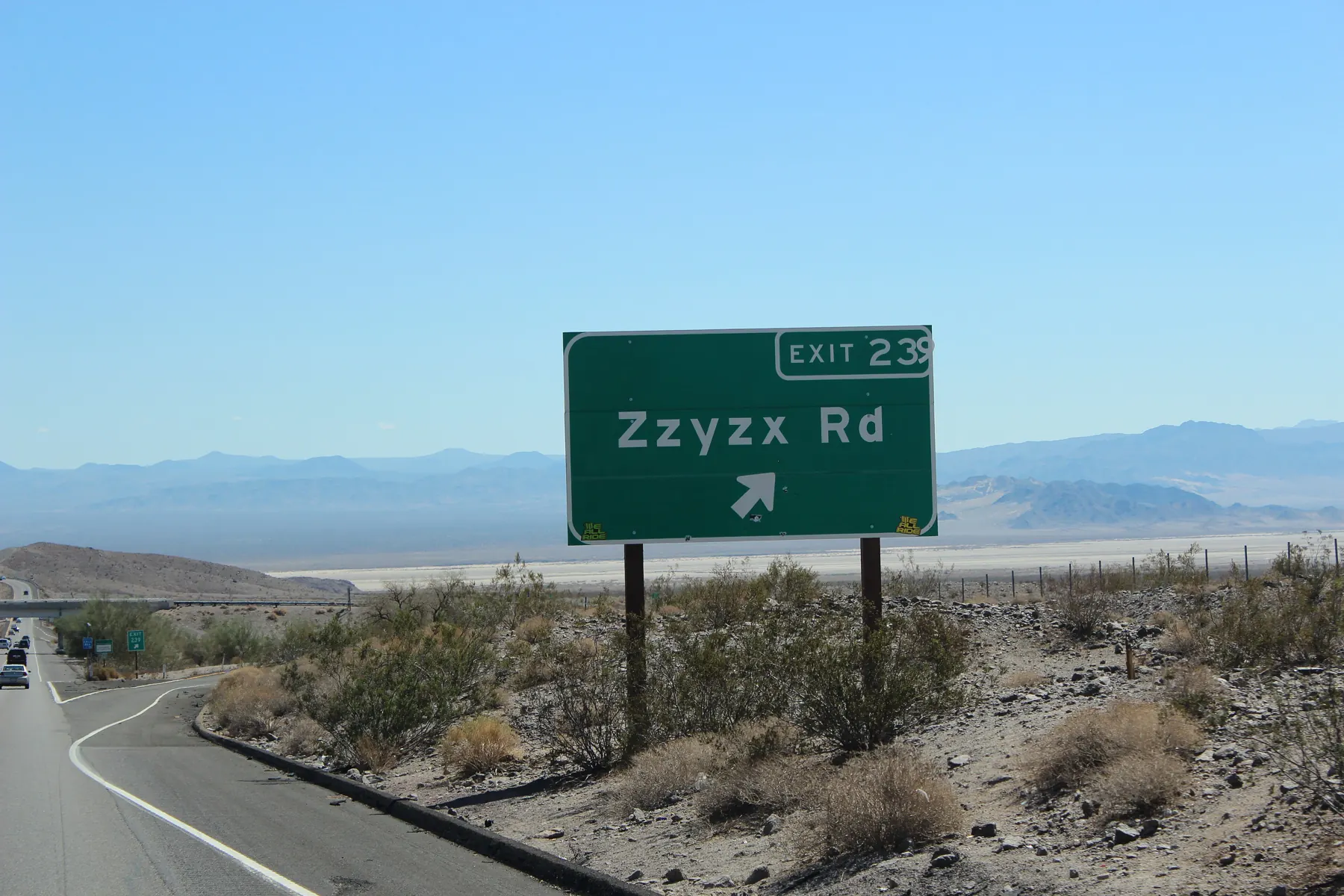
The column did not end Springer's career. It foreshadowed it. He kept broadcasting for nearly four more decades. But the bureau had pinned down the basic facts early: no medical degree, ordinary ingredients and extraordinary claims. Federal courts eventually reached the same conclusions about his business at Zzyzx. Our post on what was in Springer's cures goes product by product.
Limits of the method
The bureau had no police power. It could publish, warn and answer letters. Enforcement belonged to the Post Office, which could prosecute mail fraud, to state medical boards and prosecutors, and increasingly to federal regulators. Cramp himself criticized the 1906 food and drug law as too weak and pushed for stronger rules on labels and advertising. Many of those came with the Federal Food, Drug, and Cosmetic Act of 1938.
The AMA's campaign against quackery also had critics. It mixed public protection with professional self-interest, and quacks like Baker exploited that by casting the AMA as a monopoly persecuting healers. Springer struck a similar note, insisting he was "helping humanity," according to the Los Angeles Times.
The paper trail survives
Cramp's files outlived him. He died in 1951, and the AMA called him "a pioneer in the fight against quackery and fraud in the healing arts." Researchers still use the bureau's records to trace people like Springer. Much of what we know about his early career, his invented credentials and his 1930s tours rests on the documents that one office collected, letter by letter.
Sources
- Arthur J. Cramp. Wikipedia (Propaganda for Reform Department, 1906–1936; Fake File; Testimonial File; Nostrums and Quackery; radio; quotation): en.wikipedia.org/wiki/Arthur_J._Cramp
- James Harvey Young, "Arthur Cramp: Quackery Foe," Pharmacy in History 37(4):176–182 (1995), PMID 11609047.
- AMA Bureau of Investigation, "Curtis Howe Springer: A Quack and His Nostrums," JAMA 105(11):900, Sept. 14, 1935: doi.org/10.1001/jama.1935.02760370056027
- Curtis Howe Springer. Wikipedia (WGN, WCFL, AMA findings): en.wikipedia.org/wiki/Curtis_Howe_Springer
- United States v. Springer, 478 F.2d 43 (9th Cir. 1972): openjurist.org/478/f2d/43
- Cecilia Rasmussen, "Zzyzx: An Unlikely Home of Hucksterism and Miracle Cures," Los Angeles Times, June 16, 2002: www.latimes.com/archives/la-xpm-2002-jun-16-me-then16-story.html
- Federal Food, Drug, and Cosmetic Act. Wikipedia: en.wikipedia.org/wiki/Federal_Food,_Drug,_and_Cosmetic_Act
Spotted an error? Tell us and we will correct it.