1974
The day the gate closed
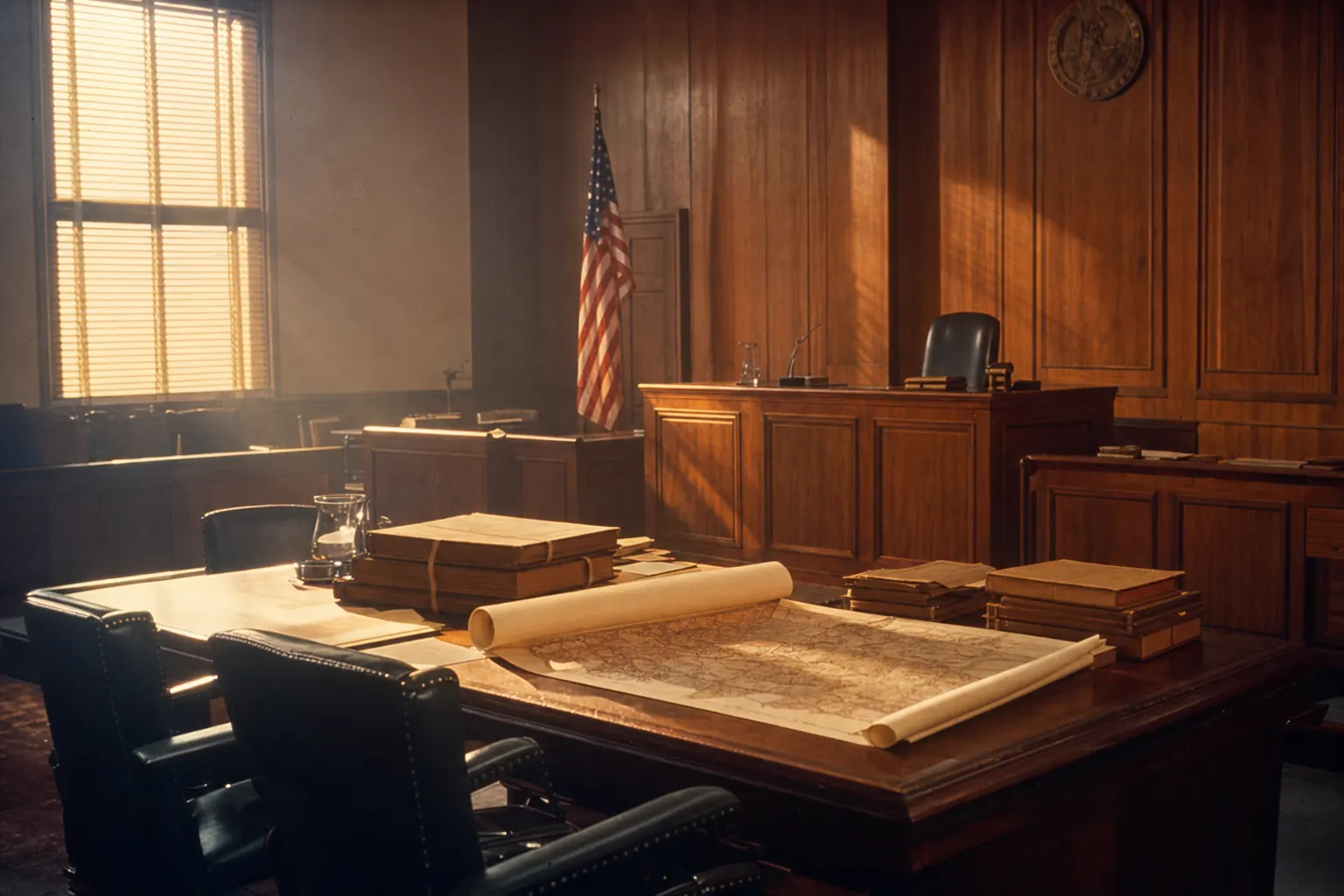
Thirty years after he arrived, the federal courts ruled that Curtis Springer had never had the right to stay.
The end of Zzyzx came through the courts, one ruling at a time. The opinions are public records and you can read them free online; quotations here come straight from them.
The record
- Dec. 15, 1970. The district court describes “four guestroom buildings aggregating 59 units, a dining room with kitchen facilities, an administration building, a chapel-meeting room, indoor and outdoor mineral baths” on the claims.
- June 18, 1971. A preliminary injunction bars renting rooms, packaging “Zzyzx” food products, printing literature and recording radio programs on the land.
- Nov. 14, 1972. The Interior Board of Land Appeals rules all ten claims invalid: no valuable mineral was ever discovered.
- Nov. 30, 1972. The Ninth Circuit affirms the injunction (478 F.2d 43). Rehearing denied Mar. 5, 1973.
- Mar. 6, 1973. Summary judgment: the Springers have no right, title or interest in the land and are to be ejected.
- Jan. 17, 1974. The Ninth Circuit affirms (491 F.2d 239); rehearing is denied Feb. 26.
- Apr. 11, 1974. Springer is removed from Zzyzx.
“These activities cannot by any stretch of the imagination be considered the mining of valuable minerals…” (United States v. Springer, 491 F.2d 239, 9th Cir. 1974)
Two governments, two questions
It is easy to hear “1974” and picture one punishment. The paper record is two arguments that share a defendant and almost nothing else.
California’s case was about speech in commerce. Arrest came in November 1968. The charge was false advertising: that the health claims did not match the goods. A criminal advertising case can end in fines and pleas without deciding who owns a square foot of desert. The eighteen-count figure lives in a footnote of the later federal appeal, which is an odd place to learn about a state prosecution, but it is the public appellate source this site has. The Mojave Project’s lower figure is noted on the timeline. Neither number is the ejectment.
The United States’ case was about possession. Mining claims on federal land are a license to look for a valuable mineral, not a deed, and not a zoning permit for guest rooms. The Bureau of Land Management had already called him a squatter in the press. In July 1967 the Los Angeles Times, as relayed by The Mojave Project, reported a demand for $34,187 in damages and back rent. The lawsuits that followed asked a narrower question than “was he a fraud.” They asked whether a chapel, a dining room, a recording studio, and dozens of guest rooms were a mine.
The district court in December 1970 said they were not, and it counted the plant: four guest buildings totaling 59 units, plus the dining room, kitchen, administration building, chapel, and the indoor and outdoor baths. That inventory is why the resort could not hide inside a prospector’s statute. A prospector does not need 59 guest units. On June 18, 1971, the injunction told the defendants to stop treating the claims as a resort: no renting to the general public, no packaging foods under the Zzyzx name on the land, no printing press, no radio taping there, except as genuine mining required. The Ninth Circuit left that order in place on November 30, 1972. Rehearing was denied the following March.
Invalidating the paper came from a different desk. On November 14, 1972, the Interior Board of Land Appeals held that all ten claims failed because no valuable mineral had been discovered. Land-office invalidity and the courts’ injunction are related but they are not the same document. One says the claims never ripened. The other says stop running a hotel while you argue.
Ejectment is the possession judgment. On March 6, 1973, summary judgment said the Springers had no right, title, or interest and should be removed. The 1974 appeal affirms that judgment. It also explains the business model the land case cared about: the products were not sold in the ordinary way; they were given when listeners answered radio appeals with donations. The court’s point was not a new medical review. It was that this activity, whatever you call it, was not mining.
April 11, 1974, is not a date inside those opinions. The opinions stop at affirmance and at the February 26 denial of rehearing. The removal morning, and the 36 hours to salvage three decades of buildings, come from The Mojave Project, which also points to the next day’s Los Angeles Times story. Use the opinions for what the courts ordered. Use the dispatch for when the gate actually closed. After that morning the legal question was over and the land question changed into a management question: bulldoze the buildings, or hand them to a university. The fish, already listed, is why that second question had a biological constraint. That story is on the tui chub and Desert Studies Center articles, not in the 1974 judgment.
After the gate
Springer moved to Las Vegas and kept arguing his case in print, including a 1984 essay in the Baker Valley News called “The Legal Rape of Zzyzx.” Back at the springs, the BLM weighed demolition. The historian Dennis Casebier said bulldozers stood ready. Instead, in 1976, the old resort became the CSU Desert Studies Center. Read the full eviction story →
Read next
7 min read
April 11, 1974: The Day the Government Closed Zzyzx
After a decade of federal litigation, Curtis Howe Springer was removed from Zzyzx on April 11, 1974. What led up to that morning, what happened after, and why the buildings survived.
7 min read
The 1872 Mining Law Loophole: How One Man Ran a Resort on Federal Mining Claims for 30 Years
Curtis Springer built a hotel, chapel and airstrip on mining claims. How the General Mining Act of 1872 let him stay for three decades, and what the federal court record says ended it.
6 min read
Desert Studies Center at Zzyzx: Location and History
How Curtis Springer's health resort became a California State University field station in 1976, and what scientists and students do at Zzyzx today.
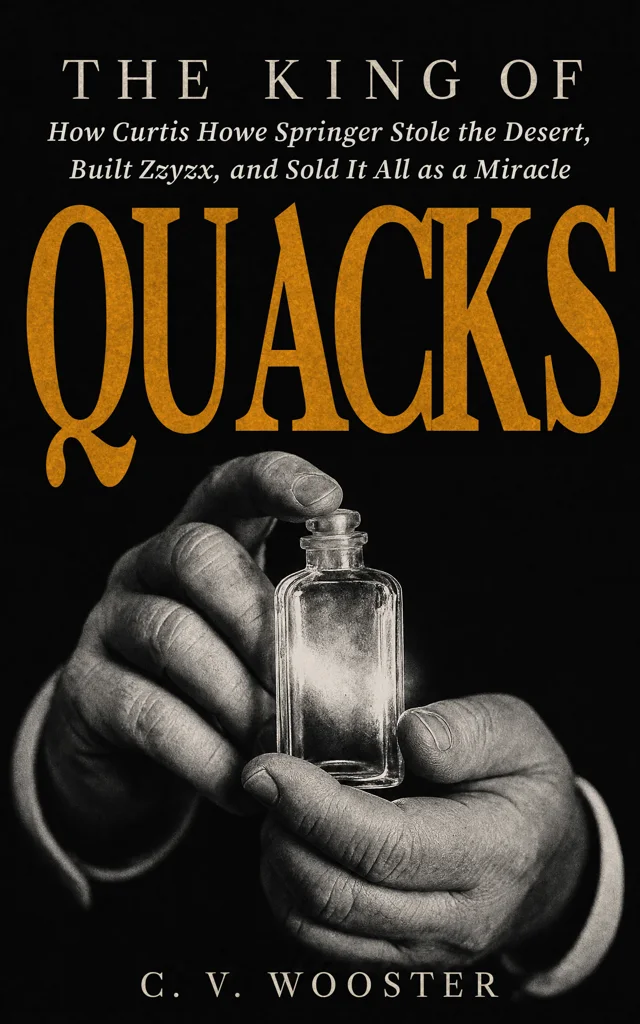
The Kindle edition
The King of Quacks is the true story of the radio preacher who claimed a desert, named it the last word in the dictionary and sold it all as a miracle.
The form opens a message in your own email program to hello@directoryassistancegroup.com. This site does not store the address. See our privacy policy.