For thirty years, Zzyzx ran on a simple rule: nobody was turned away. Springer charged guests on a sliding scale, ran a free bus out from Los Angeles and welcomed anyone who would sit through a sermon. On April 11, 1974, the gate finally closed, and it closed on him.
How it came to this
The eviction was not sudden, even if it felt that way to the people living there. The federal case had been building since at least the 1960s. In July 1967 the Los Angeles Times reported that the Bureau of Land Management considered Springer a "super squatter" and was seeking $34,187 in damages and back rent. In November 1968 California arrested him on false-advertising charges, a separate case that ended with guilty pleas.
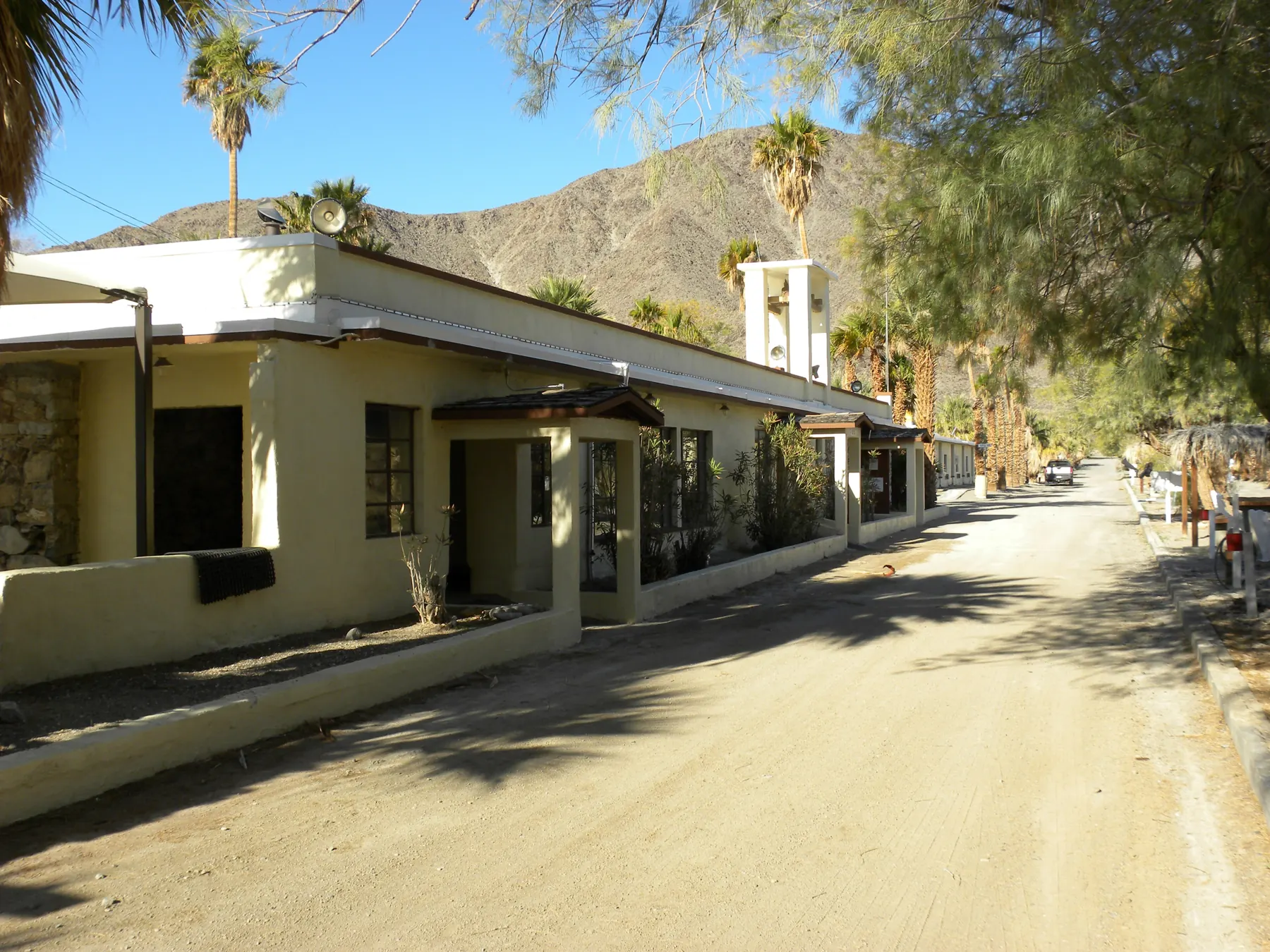
The federal court record, now freely available, lays out the steps. A district court opinion in December 1970 found the resort, with its 59 guest units, chapel, mineral baths and food-packaging operation, could not be justified by mining claims. A preliminary injunction in June 1971 barred Springer from renting rooms, packaging "Zzyzx" foods, printing literature or recording radio programs on the land. In November 1972 the Interior Board of Land Appeals declared his ten mining claims invalid. In March 1973 the district court ordered the Springers ejected. On January 17, 1974, the Ninth Circuit affirmed, and it denied rehearing on February 26: the products "were not sold," the court noted, but given away in return for donations prompted by his radio appeals, and that could not "by any stretch of the imagination be considered the mining of valuable minerals." Our mining law post walks through each ruling.
The appeals court had also seen the delays coming. In its 1972 opinion it noted that Springer had repeatedly sought stays from any available court or judge, and listed them so that future judges would know the history.
The morning itself
The Mojave Project's history of Zzyzx describes the end plainly. Springer was forcibly removed by the Bureau of Land Management on April 11, 1974, for unauthorized use of federal land, and was given thirty-six hours to vacate and salvage what he could of three decades of building and collecting. The Los Angeles Times covered it the next day under a headline that captured how the press had come to see him: "Zzyzx Goes Pffft—Evangelist Is Evicted from Desert Tract."
Not everyone at Zzyzx was a short-term guest. The resort could house more than a hundred people overnight, according to The Mojave Project, and the Los Angeles Times later reported that its permanent residents were mostly elderly and disabled. For them, the end of Zzyzx meant losing a home as well as a sermon.
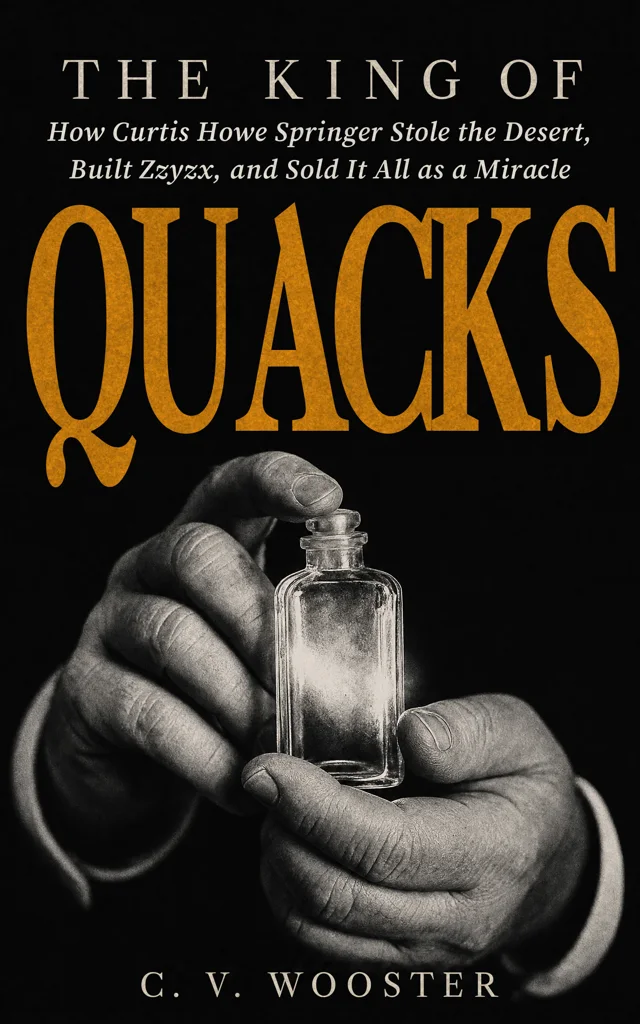
In The King of Quacks, the eviction morning opens the book. Some details of that scene are reconstructed from the documentary record, and the book's Author's Note says which ones.
What Springer did next
Springer and his wife Helen moved to Las Vegas. He did not go quietly. He kept writing about Zzyzx, and the Baker Valley News in the nearby town of Baker gave him space. On October 18, 1984, the paper published his long essay "The Legal Rape of Zzyzx," along with letters from locals who credited him with building and maintaining Zzyzx Road and helping the town. The Mojave Project notes that many Baker residents sympathized with him, partly because the BLM closed the road to the public in the years after the eviction.
Springer died in Las Vegas on August 19, 1985, at 88. He was buried at Riverside National Cemetery, a resting place for military veterans. Helen Springer lived until June 14, 2020, and died at 100. Cemetery records show she is buried in the same plot.
The bulldozers that didn't roll
The resort could easily have disappeared. The Mojave Project reports that the BLM weighed several futures for the site, including demolishing Springer's buildings to return Soda Springs to its earlier state. Dennis Casebier, a Mojave Desert historian who interviewed Springer at length between 1981 and 1985, said the agency had bulldozers on site waiting for the go-ahead. He also believed most of Springer's papers were deliberately destroyed in the process.
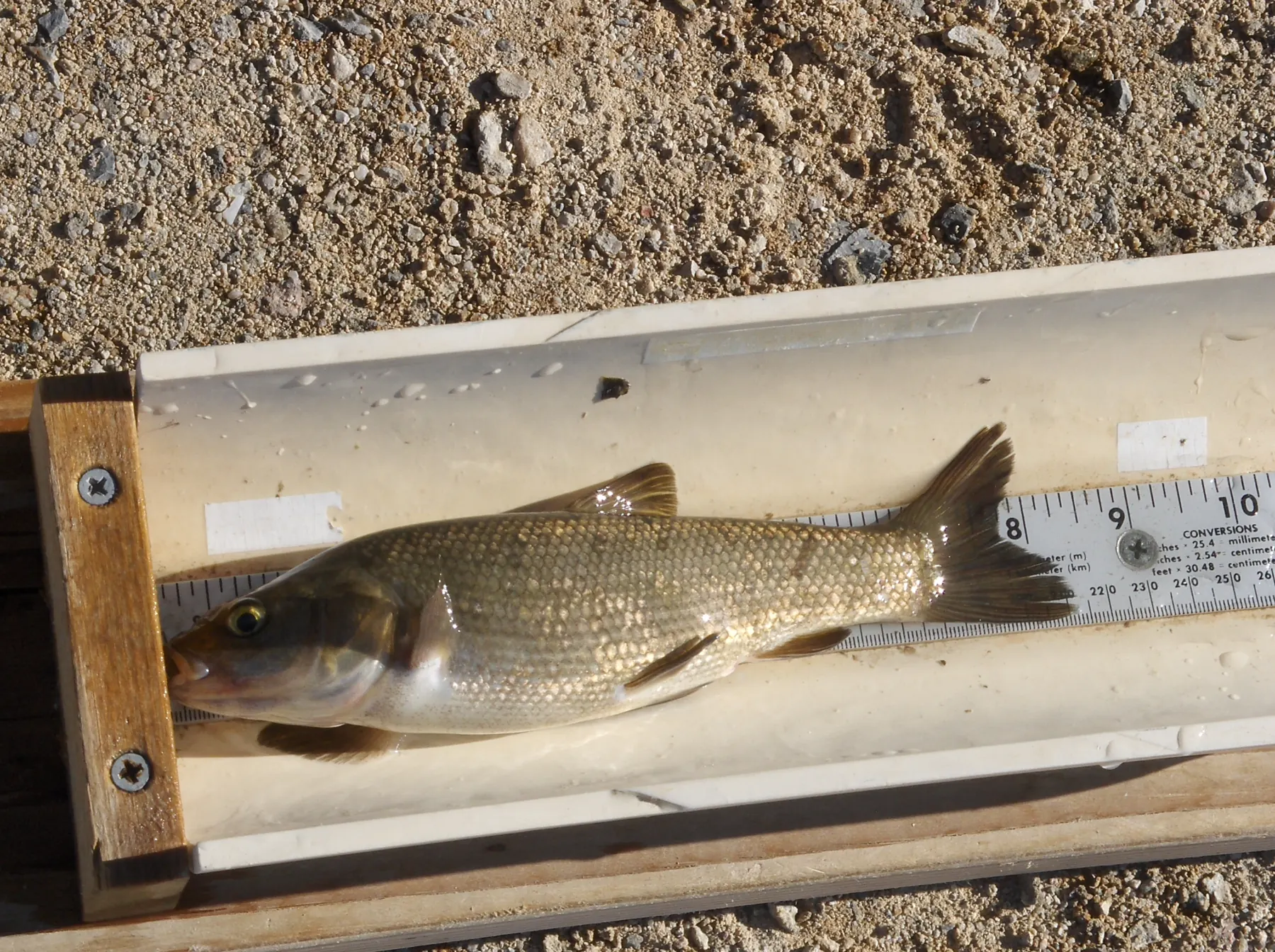
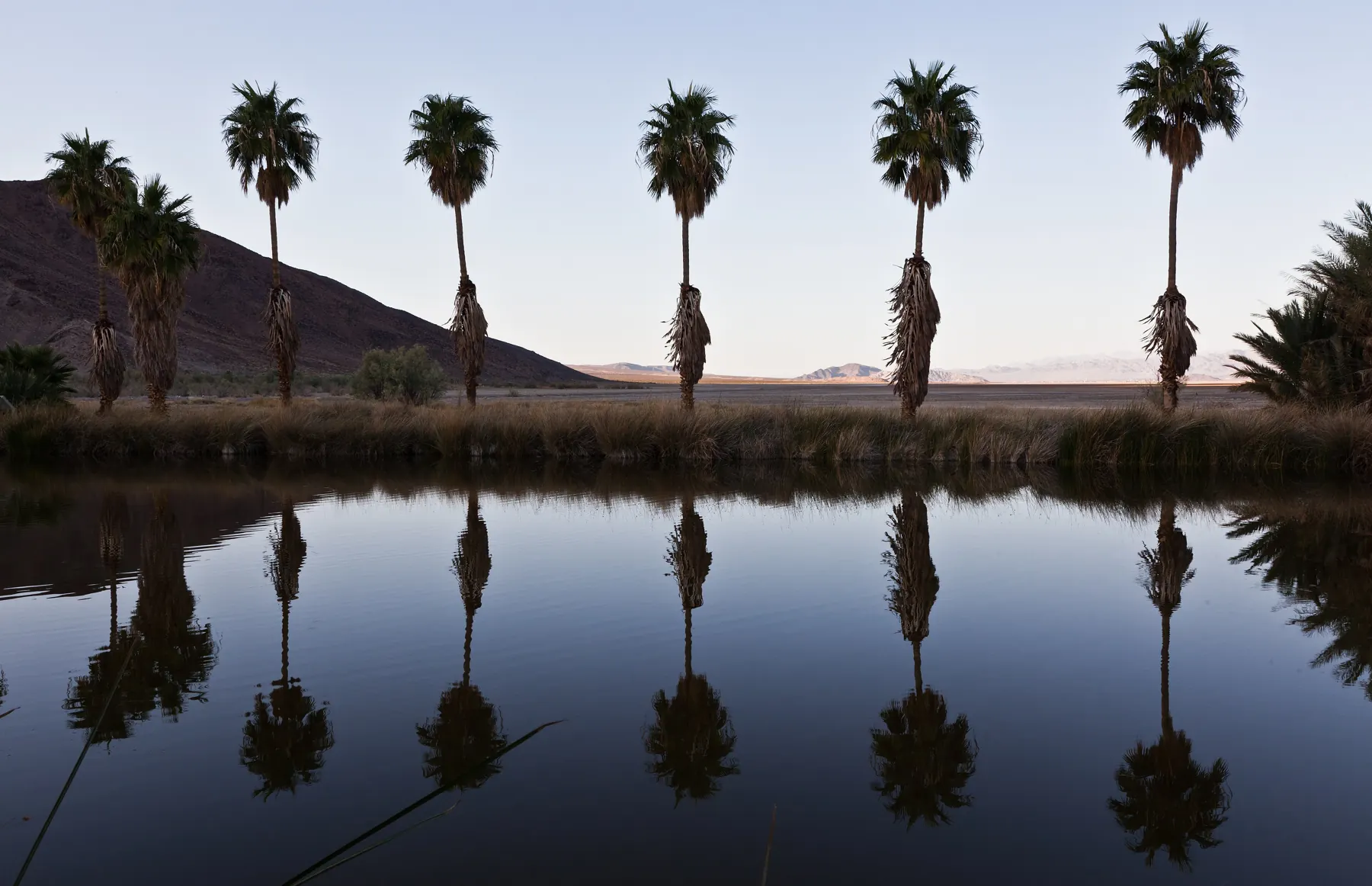
Two things saved the buildings. One was a deal: in 1976 the BLM and the California State University agreed to manage the old resort as the Desert Studies Center, a field station for students and scientists. The other was a fish. The ponds Springer had dug and kept full were home to the Mohave tui chub, listed as federally endangered in 1970, and Zzyzx held its last genetically pure populations. See the fish that outlasted the King of Quacks.
Casebier visited again in 1983 and found the place changed. The welcome signs were gone, he wrote, replaced by "a battery of KEEP OUT signs." Today the balance has shifted back. The road is open, the National Park Service runs a public trail around Lake Tuendae, and the old resort buildings house classes and researchers.
Why the date matters
April 11, 1974 is the point where the story of a man turns into the story of a place. Before it, Zzyzx was Springer's stage. After it, the land became what it had always legally been, public, and it was put to a use he never imagined: studying the desert he had sold as a cure.
Sources
- United States v. Springer, 478 F.2d 43 (9th Cir. 1972), quoting 321 F. Supp. 625 (C.D. Cal. 1970): openjurist.org/478/f2d/43
- United States v. Springer, 491 F.2d 239 (9th Cir. Jan. 17, 1974; reh'g denied Feb. 26, 1974): openjurist.org/491/f2d/239
- Aurora Tang, "Zzyzx: Revisiting Doc Springer's Boulevard of Dreams," The Mojave Project (2015), citing the Los Angeles Times, Apr. 12, 1974, Springer's Baker Valley News essays (Oct. 18, 1984) and Dennis Casebier: mojaveproject.org/dispatches-item/zzyzx-dr-springer/
- Cecilia Rasmussen, "Zzyzx: An Unlikely Home of Hucksterism and Miracle Cures," Los Angeles Times, June 16, 2002 (free Wednesday bus from the Figueroa Hotel; permanent residents): www.latimes.com/archives/la-xpm-2002-jun-16-me-then16-story.html
- Curtis Howe Springer. Wikipedia (death Aug. 19, 1985; burial at Riverside National Cemetery): en.wikipedia.org/wiki/Curtis_Howe_Springer
- Find a Grave, memorial 234661546, Helen Springer (1920–2020), Riverside National Cemetery, Section 14, Site 497 (findagrave.com).
- U.S. Geological Survey, "Evaluating Potential Refugia for the Endangered Mohave Tui Chub": www.usgs.gov/centers/nevada-water-science-center/science/evaluating-potential-refugia-endangered-mohave-tui-chub
- CSU Desert Studies Center (established 1976): www.fullerton.edu/dsc/
Spotted an error? Tell us and we will correct it.