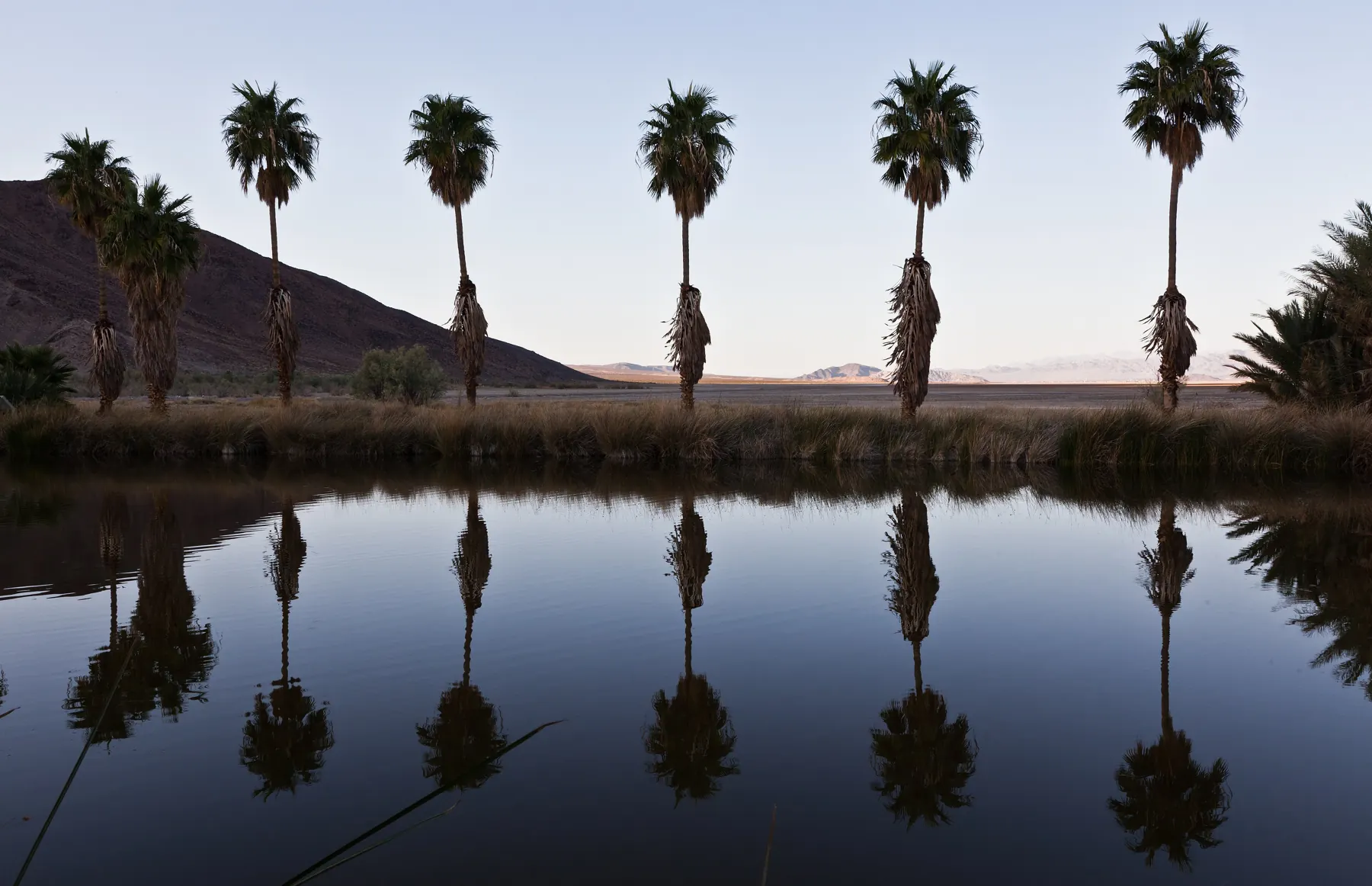
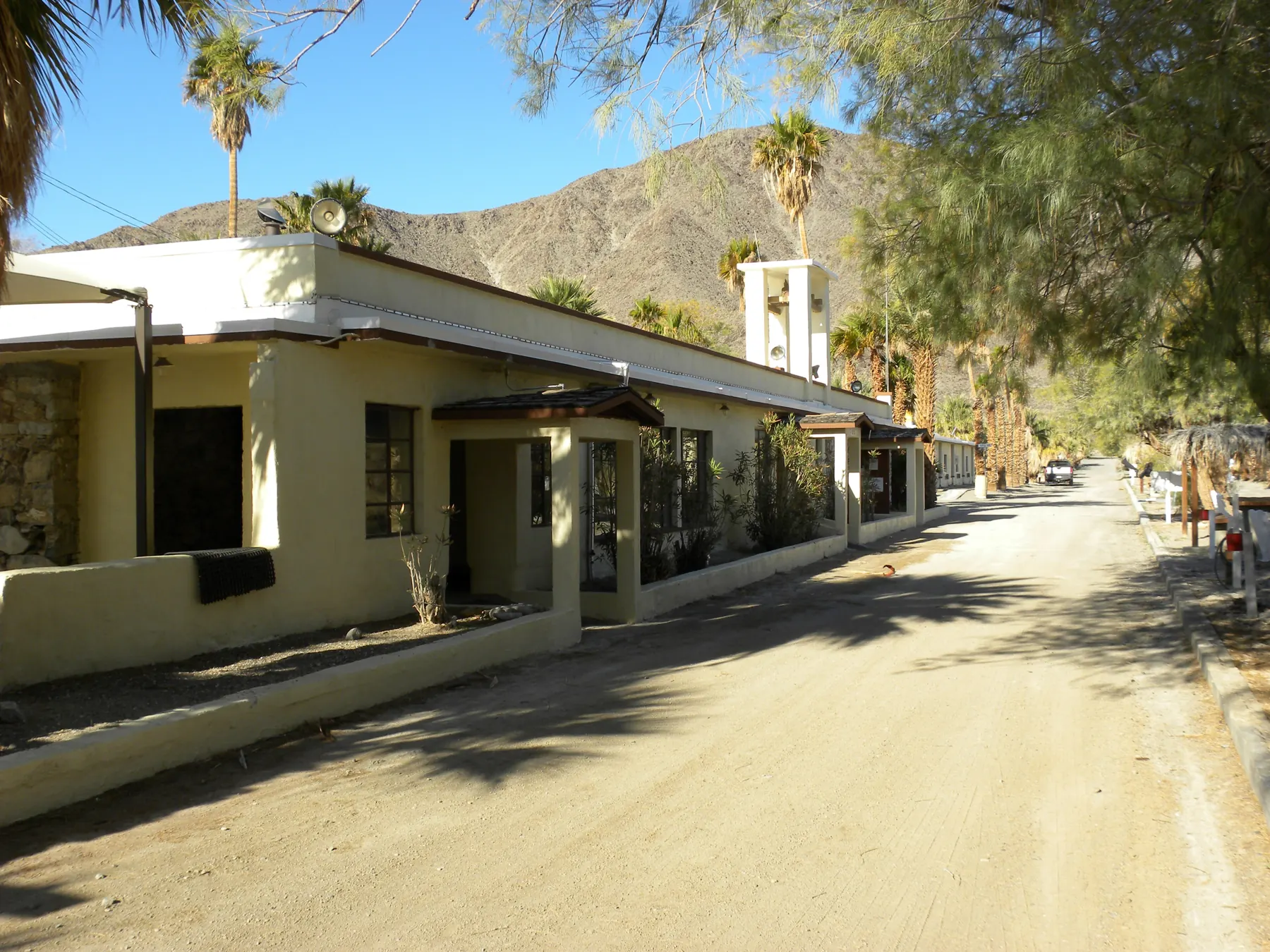
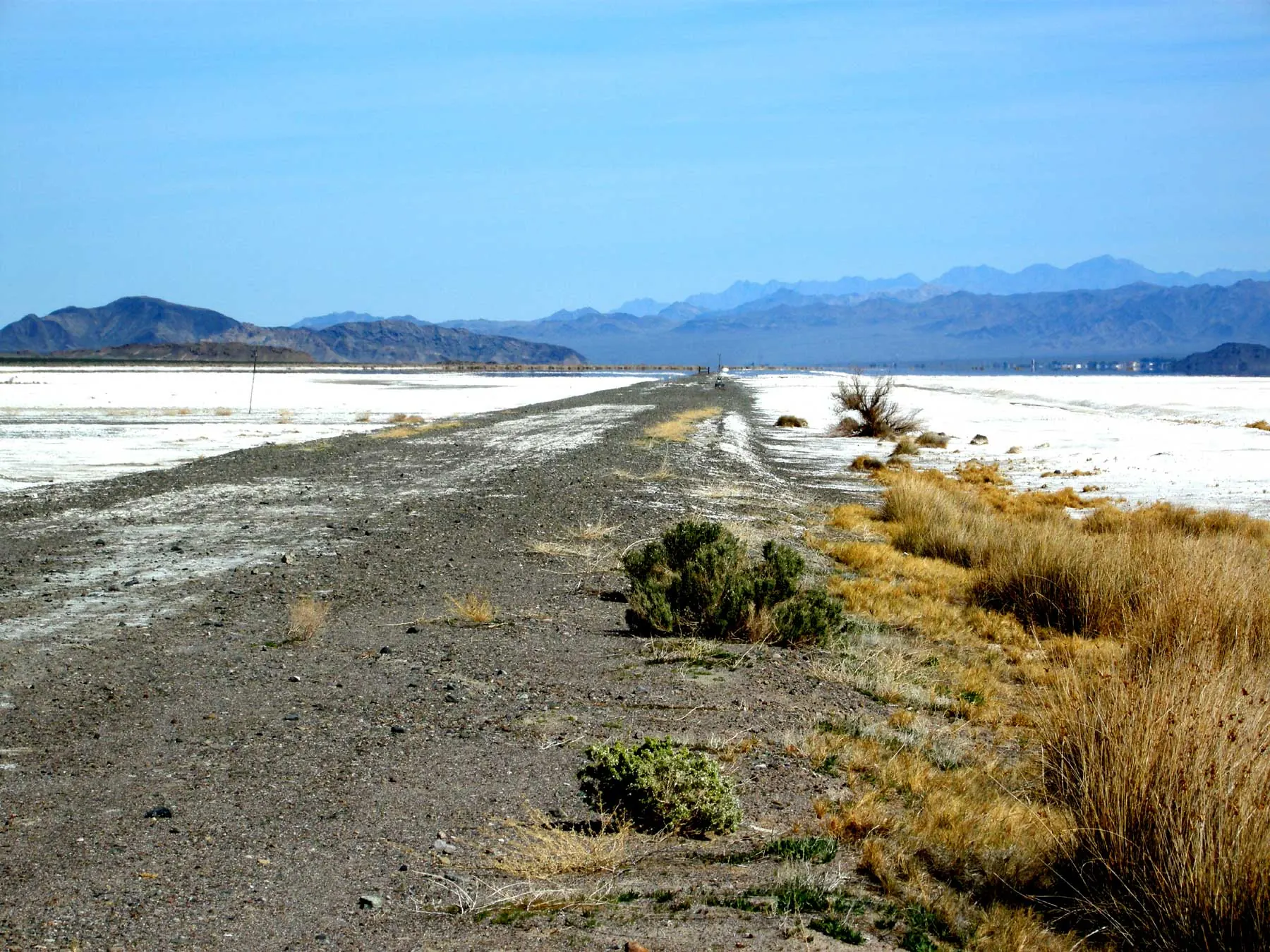
Of all the strange things at Zzyzx, the most important is also the smallest. In the springs and ponds at the edge of Soda Dry Lake lives the Mohave tui chub, a modest olive-and-silver minnow that once swam the length of the Mojave River. Today it exists in the wild only because of a handful of desert pools, and one of them is an ornamental lake that a radio evangelist dug to impress his guests.
The only native fish of the Mojave River
The National Park Service calls the Mohave tui chub (Siphateles bicolor mohavensis, also written Gila bicolor mohavensis) the only fish native to the Mohave River basin in San Bernardino County. The river is mostly underground, surfacing in places before it ends at Soda and Silver lakes. Its chub adapted to that hard, shifting world over thousands of years.
People undid that in a few decades. The NPS says arroyo chubs, a related species, were introduced into reservoirs at the river's headwaters in the San Bernardino Mountains and showed up in the Mojave River in the 1930s. The severe floods of March 1938 helped the newcomers spread downstream, and the two species hybridized. By 1970, genetically pure Mohave tui chubs had been eliminated from the Mojave River itself.
The refuge at Soda Springs
A small population survived where the river ends. The U.S. Geological Survey reports that by the early 1950s the only remaining population was in MC Spring, a small spring-fed pool at Zzyzx, also called Soda Springs, just inside what is now the western edge of Mojave National Preserve.
In the 1950s, while Springer was running his resort, two new sub-populations were established a few hundred meters from MC Spring, the USGS says: one in Lake Tuendae, the spring-fed ornamental lake built for the resort, and one in an excavated pit called West Pond, or Three Bats Pond. The West Pond population died off in 1985 because the water grew too salty. Lake Tuendae's survived.
Springer named the lake himself. He said Tuendae was an Indian word meaning "where the waters come together," according to the Los Angeles Times, a claim worth treating with the same caution as his other stories.
Endangered: 1970
The federal government listed the Mohave tui chub as endangered in 1970; the U.S. Fish and Wildlife Service listing date is October 13, 1970. California listed it as endangered in 1971, and the Fish and Wildlife Service issued a recovery plan in 1984, according to the NPS.
That timing matters to the Zzyzx story. The species was listed while the federal government was fighting Springer in court over the land. When he was evicted in 1974, the lake that had been a resort amenity was also one of the last refuges of an endangered species. As our eviction post describes, the Bureau of Land Management considered bulldozing the resort. Whatever happened to the buildings, the water and its fish had to be protected.
Building new homes for a desert fish
Recovery has been slow, because the desert offers very few places a fish can live. The USGS notes that the 1984 recovery plan lists fourteen attempts to establish new populations between 1939 and 1981, and only one survived. Poor water quality, too little water and floods doomed the rest.
The recovery plan sets a high bar. The fish could be fully delisted only if it is reestablished in the Mojave River itself, which the USGS describes as impossible for the foreseeable future because the introduced fish are still there and the habitat has changed. It could be downgraded from "endangered" to "threatened" once six independent populations exist in the broader Mojave River drainage.
As of the USGS's 2018 summary, five populations met the plan's criteria:
- Lark Seep at China Lake Naval Weapons Center (established 1972)
- Camp Cady Wildlife Area (1986)
- Lewis Center for Educational Research in Apple Valley (2008)
- Morning Star Mine pit lake in Mojave National Preserve (2011)
- MC Spring and Lake Tuendae at Zzyzx
The USGS and the National Park Service have been testing water and sediment at candidate sites to find a sixth.
Seeing the fish
You can walk the shore of Lake Tuendae on the NPS's short, accessible trail at the end of Zzyzx Road. The chubs are small and often stay among the reeds and deeper water, so bring patience, and polarized sunglasses help. Please follow the posted rules: do not wade, release anything into the water or disturb the plants. Moving fish, bait or plants between waters is how the Mojave River lost its native chub in the first place. Our visiting guide has practical details.
A last word
There is a neat irony in it. Springer named his resort to be "the last word," and he dug Lake Tuendae to sell a fantasy of healing water. The water did turn out to be precious, though not for the reasons he claimed. The resort is gone. The lake and its fish remain.
Sources
- National Park Service, "Mohave Tui Chub," Mojave National Preserve: www.nps.gov/moja/learn/nature/mojave-tui-chub.htm
- U.S. Geological Survey, Nevada Water Science Center, "Evaluating Potential Refugia for the Endangered Mohave Tui Chub" (2018): www.usgs.gov/centers/nevada-water-science-center/science/evaluating-potential-refugia-endangered-mohave-tui-chub
- U.S. Fish and Wildlife Service, Mohave Tui Chub 5-Year Review (listing history): ecos.fws.gov/docs/five_year_review/doc2392.pdf
- Cecilia Rasmussen, "Zzyzx: An Unlikely Home of Hucksterism and Miracle Cures," Los Angeles Times, June 16, 2002: www.latimes.com/archives/la-xpm-2002-jun-16-me-then16-story.html
- National Park Service, "Lake Tuendae Nature Trail": www.nps.gov/moja/planyourvisit/lake-tuendae-nature-trail.htm
Spotted an error? Tell us and we will correct it.